


Volcanoes National Park lies in north-western Rwanda and borders Virunga National Park in the Democratic Republic of Congo and is home to 5 of the 8 volcanoes of the Virunga Mountains. The mountainous park is adorned with a variety of forest types, occurring at different altitudes, providing a number of different habitats. Gorilla safaris are conducted in Volcanoes National Park, after having re-established this unique tourist experience in 1999. There are 300 of these gentle giants residing in the park and 4 habituated families that tolerate the presence of humans in their midst. The gorillas have the freedom to roam far and wide within the park, so the effort involved in tracking them can sometimes involve a substantial amount of hiking and trekking. This, however, is all part of the experience and is an incredible and unique forest and bamboo environment that is an extremely special place to be in.
Tracking mountain gorillas is one of Africa’s top wildlife experiences, and Volcanoes National Park is perhaps the best place for it. There are 20 habituated troops here, 12 of which are used for visitors (the others are habituated for research purposes). Each troop has its own home range and family structure. Budget-permitting, you can consider booking two gorilla treks on two different days. In addition to mountain gorillas, troops of habituated golden monkeys, endemic to the Albertine Rift, can also be tracked. They are among the most beautiful of African monkeys and their gentle nature makes them even more attractive. The monkeys have become totally relaxed around humans, which means you can observe them interacting, feeding and going about their daily routines.
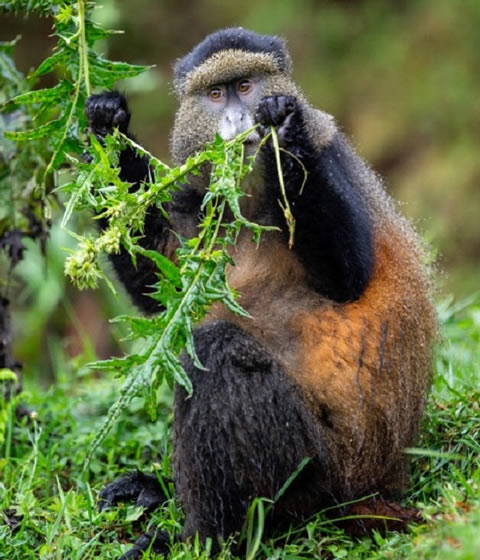 Golden Moneky at the Volcanoes National Park
With about 200 species recorded (including 17 Albertine Rift endemics), Volcanoes National Park offers great bird watching. However, most of the park’s special birds can also be seen in Nyungwe National Park, which is set up better for birding. Local specialties are the vulnerable Grauer’s swamp warbler and the scarlet-tufted sunbird, which can be found on the summit of Mt Bisoke. The birdlife in Volcanoes NP is good year-round, but the volcanoes are especially wet and often shrouded in mist. This means that birding in this area is easiest during the Dry season, from June to August, and to a lesser extent in September, January and February when it rains slightly less. This is also the best time for gorilla trekking.
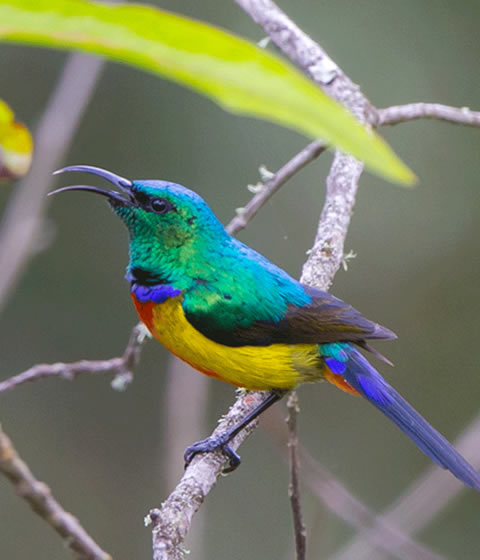 Birds at the Volcanoes National Park


