


Serengeti National Park is one of the best-known wildlife sanctuaries in the world, and symbolises the classic African safari. With more than 2 million wildebeest, half a million Thomson's gazelle, and a quarter of a million zebra, it has the greatest concentration of plains game in Africa. The Serengeti is also synonymous with the wildebeest and zebra migration that encompasses a vast area of both the Serengeti and the neighbouring Masai Mara National Park. Normally, the best time to see the animals here is during January and February. Heading north into the Park, the grass becomes noticeably longer, and it is usual to see Grant's and Thomson's gazelles, as well as the occasional small groups of topi and kongoni. Towards Seronera, the park headquarters, the landscape becomes more varied. Hills rise out of plains criss-crossed by small rivers. Umbrella acacia trees appear, elegant and serene, contrasting with the twisted commiphora trees.
The focus of most safaris in northern Tanzania, Serengeti National Park is renowned as the arena for the world’s greatest mammal migration. Even away from this iconic wildlife spectacle, the Serengeti’s sheer density of animals makes for incredible wildlife viewing throughout the year. The southern plains near Seronera are the most popular, but it’s also worth exploring the Western Corridor and Mara River regions. The Serengeti supports an incredible abundance and diversity of wildlife, from the Big Five (although black rhino is rarely seen) to giraffe, cheetah, spotted hyena, black-backed jackal, warthog and a huge variety of antelope. The Grumeti and Mara Rivers are home to grunting hippos and gigantic prehistoric-looking crocs, known for their feeding frenzy during the annual wildebeest river crossings.
Tanzania offers excellent wildlife viewing. If it’s your goal to tick off the Big Five, you’re in luck. Elephant, buffalo and lion are easily seen. If you’re visiting the Ngorongoro Crater, you’ll probably spot black rhino too. Although common, leopards are very secretive. This makes any encounter with the most elusive of the big cats extra special. The wildebeest migration is one of Africa’s greatest wildlife spectacles. At least 2 million hooved animals – mainly wildebeest, but also zebra and gazelle – move around the Mara-Serengeti ecosystem. Highlights of this 800km/500mi circular trek include the wildebeest calving on the Southern Serengeti plains and the dramatic Mara River crossings in the north
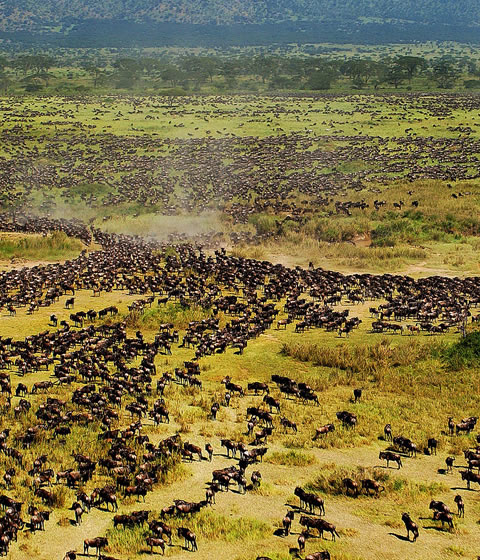 Wildebeest Migration at the Serengeti National Park
Tanzania is an incredible birding destination. It has one of the largest species lists of any African country: over 1,100 birds have been recorded, of which more than 800 are resident and nearly 200 are regular migrants. About 40 endemic species are recognized (some are controversial splits). Some endemics easily seen in the Northern circuit include ashy starling, yellow-collared and Fischer’s lovebird and grey-breasted spurfowl. Most other national endemics are restricted to the Eastern Arc Mountains, the country’s most important birding area. Migrants are present from November to April. The birdlife in Tanzania is good year-round, but is at its best from November to April when Palearctic and intra-African migratory birds are present. At this time, many resident bird species are in breeding plumage and nesting. The migratory period occurs during the Wet season (November to May), which is also the hottest time of the year. The coastal region, especially, can get uncomfortably hot. The wettest months are March to May, when part of the country experiences daily rainfall. For wildlife viewing, the Dry season (June to October) is better.
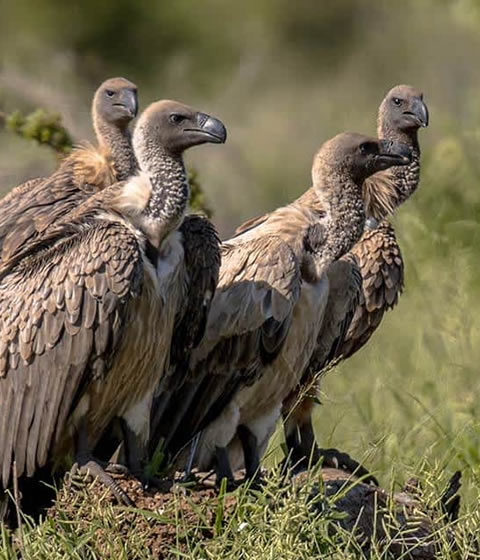 Vultures at the Serengeti National Park


